Austria visa applications and Belgium short stay Schengen visa files are often refused or delayed for simple document errors, not complicated legal issues. The strict part is not only what you submit, but whether every document matches the checklist, your route, and the correct Schengen filing rules.
TL;DR: Summary
For an Austria visa or Belgium short stay Schengen visa, the highest-risk document checks are passport age and validity, travel insurance, itinerary, accommodation, financial proof, and proof of legal residence or jurisdiction.
Austria and Belgium both require a passport issued within the last 10 years, valid for at least 3 months after leaving Schengen, with at least 2 blank pages.
Belgium is stricter on filing logic: the correct embassy depends on main destination, or first entry if stays are equal, and incomplete original files can cause refusal or delay.
Austria commonly expects original-plus-copy submission and may request extra documents based on local practice, so a “complete enough” file is often not enough.
Travel medical insurance should cover the full Schengen stay, include repatriation, and provide at least €30,000 in emergency medical cover.
If flights, hotel bookings, cover letter, and bank evidence do not tell the same story, the application can fail even when each document looks valid by itself.
If you are applying from Bangladesh, this matters even more because Schengen applications often involve visa centres, appointment timing, and in some cases cross-border filing logic. A strong file is consistent first, complete second, and only then persuasive.
What passport checks matter most for an Austria visa or Belgium Schengen visa?
For Austria and Belgium, the passport is the first hard gate: it must have been issued within the last 10 years, remain valid for at least three months after Schengen departure, and contain two blank pages.
This sounds basic, yet it is one of the most common failure points. Applicants often look only at the expiry date and miss the issue date rule. A passport can still be unexpired and still fail Schengen document review if it was issued more than 10 years ago. A second common mistake is counting validity from the visa issue date rather than the planned exit date.
Belgium’s tourism checklist is explicit on two empty side by side pages, while Austria’s official guidance also requires two empty pages and recent issuance. If your passport is close to either limit, renew it before applying rather than hoping the caseworker will accept it.
"VISAThing supports visa processing for 99+ countries, which is useful when one Schengen trip includes Austria, Belgium, or a connected itinerary that has to stay document-consistent."
One more practical point: damaged passports can create the same problem as expired ones. If the biodata page, machine-readable zone, or photo page is worn, torn, or watermarked, replacement is often safer than filing with a borderline document.
How do Austria and Belgium passport rules compare?
The core passport rules are nearly identical in Austria and Belgium, but Belgium states them in purpose-specific checklists while Austria combines official rules with local checklist practice.
In plain terms, both countries want the same three fundamentals: issue date within 10 years, three months of post-trip validity, and two blank pages. The difference is operational. Belgium often assesses those rules through a visa type checklist, such as tourism or business. Austria’s consular practice may also check the same items, while reserving the right to request more evidence depending on where you apply.
That creates a trade-off. Belgium can feel more checklist-driven. Austria can feel more discretionary. If your case is simple, Belgium’s structured checklist can make preparation easier. If your travel history or purpose is less straightforward, Austria’s “additional documents may be requested” approach means you should build a slightly thicker file from the start.
A common misconception is that a Schengen-standard passport is enough on its own. It is not. The passport only unlocks the rest of the review.
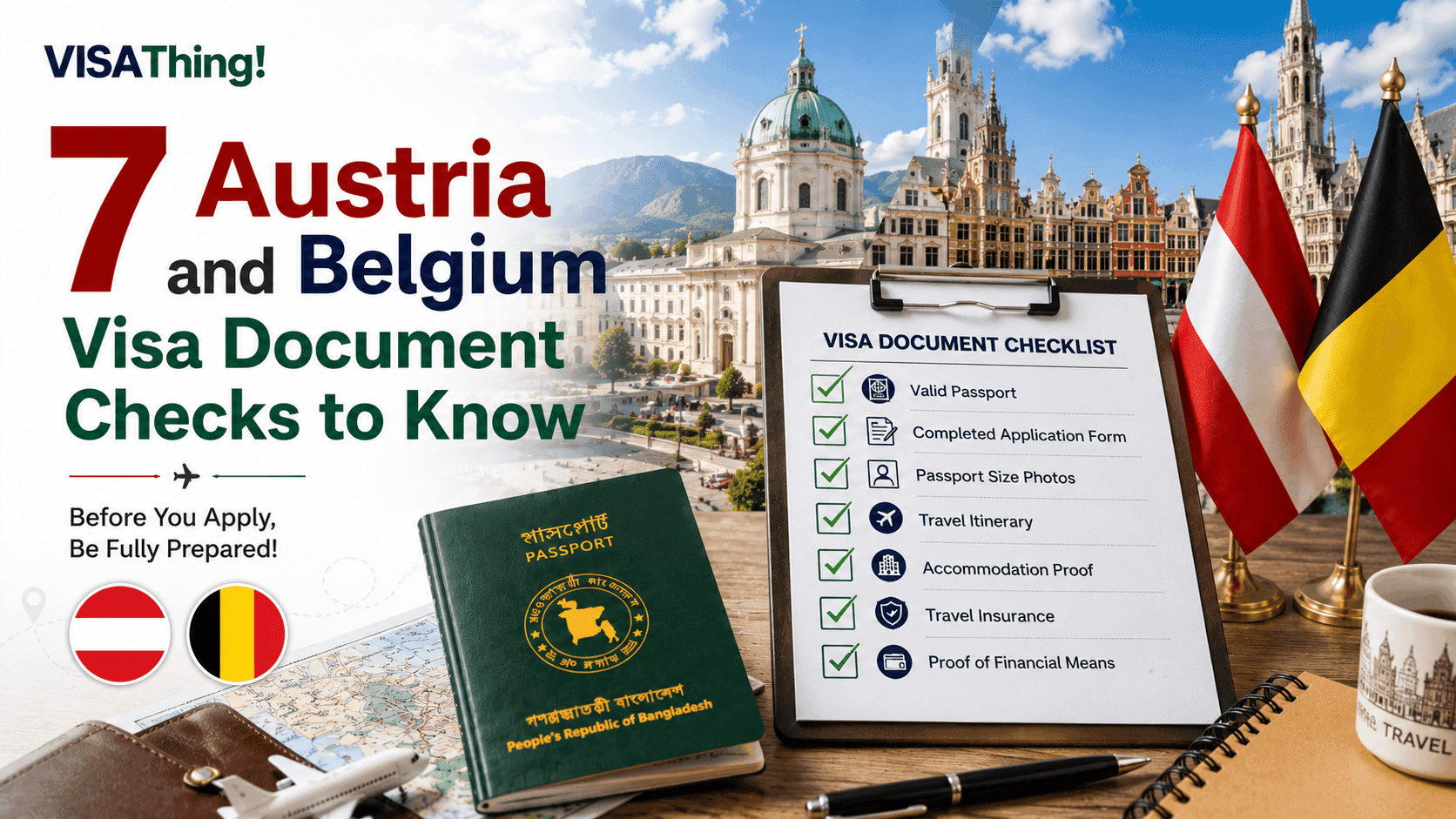
What are the 7 Austria and Belgium visa document checks to know?
These seven checks cover most document issues that sink otherwise credible Austria visa and Belgium short stay applications.
Pre-submission file review: A neutral document audit, whether done personally or through a support centre such as VISAThing, helps catch mismatched dates, wrong jurisdiction, and missing originals or copies.
Passport compliance: Issue date within 10 years, 3 months’ validity after exit, 2 blank pages.
Insurance wording: Schengen-wide cover, explicit repatriation, minimum €30,000 medical emergency cover.
Route logic: The itinerary must match the country of application, especially if Austria or Belgium is not the only stop.
Accommodation proof: Hotel bookings, invitation letters, or host details should cover the full stay with no date gaps.
Financial evidence: Bank statements, income proof, and where needed employer or host funding letters.
Residence and purpose documents: Proof of legal residence in the country of application, plus tourism, business, or other purpose-specific papers.
The best way to use this list is in sequence. If the passport or jurisdiction is wrong, polishing later documents rarely saves the application.
How should you verify travel insurance for Austria and Belgium step by step?
For Austria and Belgium, the safe standard is Schengen-compliant travel medical insurance with at least €30,000 cover and explicit repatriation.
Step 1 is to check territorial scope. The policy should be valid throughout the Schengen area, not only in Austria or only in Belgium, because a short stay Schengen visa covers the wider zone for the authorized period.
Step 2 is to check the coverage wording. Belgium’s official tourism checklist explicitly asks for at least €30,000 for medical emergency expenses and repatriation. Austria’s tourism checklist also states a minimum €30,000 and requires cover for the intended stay or transit.
Step 3 is to match the policy dates to your itinerary. If your cover starts after arrival, ends before departure, or excludes transit days, the file may be treated as incomplete. Pro tip: add a small buffer around travel dates if the insurer allows it, because flight changes are common and fixed-date policies can create avoidable gaps.
Cheap insurance is not automatically bad, but vague insurance is risky. A certificate that does not clearly show Schengen validity, cover amount, and insured traveler name often causes more trouble than the price difference is worth.
How should you prove itinerary and accommodation without creating contradictions?
Austria and Belgium both look for a believable travel plan, and the biggest risk is inconsistency between your bookings, cover letter, and destination logic.
Start with the route. If you will visit only Austria, apply to Austria. If you will visit only Belgium, apply to Belgium. If you will visit several Schengen countries, Belgium’s official rule is to apply where you will stay the longest. If stays are equal, apply to the country of first entry. This is not a minor formality. It is a jurisdiction test.
Then build the itinerary documents around that rule. Your flight reservation, internal transport, hotel bookings, and cover letter should point to the same timeline. If your cover letter says five nights in Vienna and three in Brussels, but your hotels show the reverse, the file stops looking reliable.
"VISAThing maintains 198+ country visa guidelines, which is valuable when itinerary, accommodation, and embassy-jurisdiction checks overlap in a multi-country Schengen plan."
Accommodation proof should cover every night. If you stay with a host, use the host format accepted by the relevant mission, not a casual invitation email. If you mix hotels and host stays, show both clearly. A common mistake is leaving one or two nights unexplained because of overnight transport or a late booking decision. Visa officers usually read that as an incomplete plan, not flexibility.
How should you prepare financial proof and proof of ties step by step?
Austria and Belgium both expect evidence that you can pay for the trip and that you have a reason to return after it.
Start with recent bank evidence. Belgium’s business checklist asks for the last three months of bank statements, and that is a sensible benchmark for short stay cases generally. Statements are stronger than screenshots because they show account holder name, running balance, and transaction history.
Then add status-based proof of ties. If you are employed, use salary slips, employer letters, or leave approval. If you run a business, use trade licence and business records. If you are retired, pension or retirement proof works better than a generic self-declaration. If another party will pay, document that relationship and funding clearly.
After that, check whether the financial story matches the trip cost. A short city break and a two-week multi-country tour require different levels of visible support.
Return ties: Pay slips, tax records, business licenses, or family and residence evidence can help show you will leave Schengen on time.
A common misconception is that one large deposit solves everything. In many cases, it raises more questions unless the source is documented.
How do Austria and Belgium filing rules differ for originals, biometrics and jurisdiction?
Belgium is stricter on filing logic, while Austria is stricter on original-plus-copy discipline and local document discretion.
Belgium states that decisions are made on the supporting documents in the original file, and incomplete files can lead to delay or refusal. It also adds front-end checks on the correct embassy, main destination, and purpose-specific checklist. In practice, that means a file can fail before its merits are fully weighed.
Austria’s official position is broader. It requires the standard travel document, subsistence proof, insurance, and purpose evidence, yet also says extra documents may be requested according to local standards. Austrian tourism checklists also indicate original-plus-copy submission practice. If you ignore that and bring only scans, you may lose time at the application centre or face a weak submission.
"With remote and online application support and cross-border embassy handling via India, VISAThing fits cases where filing logistics matter as much as the Austria or Belgium document set itself."
If biometrics are part of the filing route for Belgium, treat them as an appointment requirement, not as paperwork you can fix later. If the mission says you must appear, a perfect document file still cannot move without that step.
Why does proof of legal residence matter, especially for residents applying outside their nationality?
Proof of legal residence is a jurisdiction document, and Belgium makes that especially clear in its short stay checklist practice.
The rule matters most when someone applies from a country where they are living temporarily, studying, or working. Belgium’s tourism checklist asks for proof of legal residence in the country of application, and gives a specific student example: F-1 applicants in the United States need an I-20 endorsed within the past year. The wider lesson is simple. If you apply outside your nationality country, the mission often wants proof that you are lawfully resident there.
For applicants connected to Bangladesh, this becomes relevant in cross-border or overseas filings. If you apply through another country’s visa network, ask a basic question early: does the embassy accept non-residents, residents only, or both in limited circumstances? If the answer is residents only, strong financial documents will not cure the jurisdiction problem.
Pro tip: proof of residence should match the passport, application form, and local address history. Small address discrepancies cause surprising delays.
Can an incomplete file really cause refusal even if the main documents are present?
Yes, Belgium says incomplete original files can lead to refusal or delay, and Austria may request extra documents if the initial file leaves gaps.
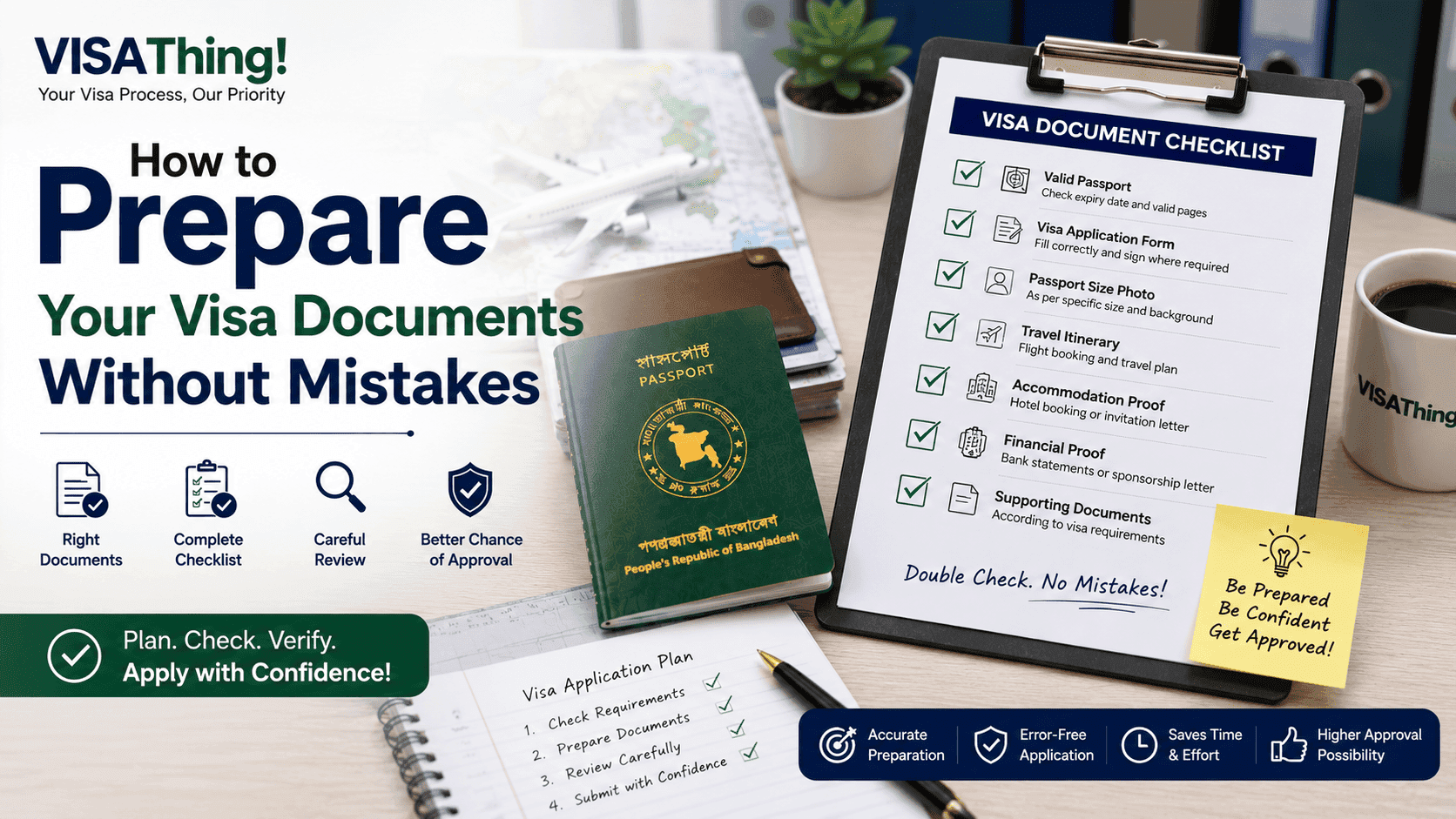
This is why document preparation is not a box-ticking exercise. Visa officers do not read papers in isolation. They test whether the documents support one coherent claim: who you are, why you are travelling, where you will stay, how you will pay, and why you will leave on time.
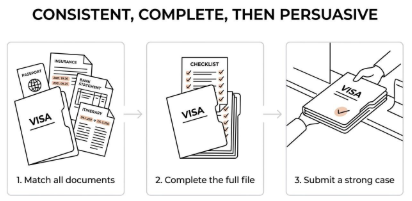
If one document breaks that chain, the risk rises quickly. A valid passport does not offset weak insurance. Good bank statements do not fix the wrong embassy. A hotel reservation does not replace proof of legal residence where that is required. If then logic matters here: if the core travel story is coherent, supporting documents confirm it; if the story conflicts with the documents, each extra paper can deepen the inconsistency.
That is also why purpose-specific checklists matter. Belgium separates tourism and business requirements for a reason. A business trip without a proper business letter often fails even when the traveler looks financially strong.
What happens after approval or arrival, especially for Belgium short stays?
A visa approval is not the last compliance step, and Belgium adds one practical post-arrival rule that many travelers miss.
Belgium states that anyone entering for a short stay of 90 days within any 180-day period must declare their presence within three days of arrival. From 10 April 2026, that can be done online through the electronic form called “My Address in Belgium”. That is an arrival obligation, not a visa document, but it still affects lawful stay.
Austria and Belgium are both Schengen destinations, so the 90/180 rule still governs the total short stay period across the area, not just inside one country. If you already spent time in another Schengen state, count those days before planning a new trip.
Keep these final checks in view:
That last point is easy to overlook because it happens after entry rather than before filing. Still, for Belgium, it is part of getting the trip right from start to finish.