TL;DR: Summary
For a Thailand visa or South Korea tourist entry, check the exact route before booking: Thailand commonly works on 30-day visa exemption, 15-day visa on arrival, or 60-day tourist visa, while South Korea often uses the short-term visit (C-3) route with stricter document proof.
Thailand’s official rules distinguish entry types clearly: visa exemption up to 30 days, visa on arrival up to 15 days, and tourist visa up to 60 days, with longer stays handled through Thailand’s Immigration Bureau.
Thai tourist visa applicants usually need a passport valid for at least 6 months, a form, photo, confirmed tickets, and proof of funds of 20,000 baht per person or 40,000 baht per family; the listed fee is 1,000 baht per entry.
Thailand’s official e-Visa system allows eligible applicants who are outside Thailand to apply online without submitting passports and supporting papers in person; the approval email should be printed for airline and immigration checks.
South Korea tourist cases commonly require a passport with more than 6 months’ validity, a round-trip e-ticket, proof of stay, financial evidence, and a daily travel plan; many applications begin with the Korea Visa Portal e-form and a printed barcode form.
K-ETA is not the same as a visa. Its temporary exemption runs until 31 December 2026 for eligible visa-waiver and designated visa-free nationals only, so travellers should confirm whether they need K-ETA, a visa, or neither.
That makes one practical rule more important than anything else: match your nationality, trip length, and filing channel before you pay for flights or hotels. If you do that first, both Thailand and South Korea become much easier to plan for.
Do Bangladeshi travelers usually need a Thailand tourist visa?
Yes. Thailand and the Royal Thai Embassy apply route-specific rules, so travelers should verify nationality, period of stay, and entry method before paying for flights.
A lot of people say “Thailand visa” as if it were one product. It is not. Official Thailand MFA guidance separates visa exemption, visa on arrival, and the tourist visa, and each route has its own stay limit.
That distinction matters because the permitted stay is different in each category. If your plan is longer than the route allows, the issue is not minor for paperwork. It means you picked the wrong entry from the start.
"VISAThing supports visa processing for 99+ countries and maintains 198+ country visa guidelines for route checking."
For travellers filing from Bangladesh, the safest habit is simple: treat Thailand entry as a category decision first, not a form-filling exercise. That one habit prevents many avoidable refusals and delays.
How do Thailand visa exemption, visa on arrival, and tourist visa compare?
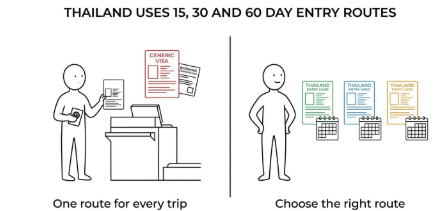
They are different entry routes. Thailand MFA states up to 30 days for visa exemption, up to 15 days for visa on arrival, and up to 60 days for a tourist visa.
The easiest way to compare them is by planned stay. If your nationality is eligible for visa exemption and your trip fits within 30 days, that route may be enough. If your nationality is eligible for visa on arrival, the stay is no more than 15 days. If you need more time, the tourist visa is usually the category people look at.
A common misconception is that “visa-free” and “tourist visa” are just two names for the same permission. They are not. The tourist visa has its own validity and supporting documents, while visa exemption depends on nationality and border rules.
Another point that confuses travelers is the difference between visa validity and period of stay. A Thai tourist visa may be valid for 3 months or 6 months to use, yet the permitted stay on that visa is generally up to 60 days. If the stay must go beyond that, Thailand’s Immigration Bureau handles extension matters.
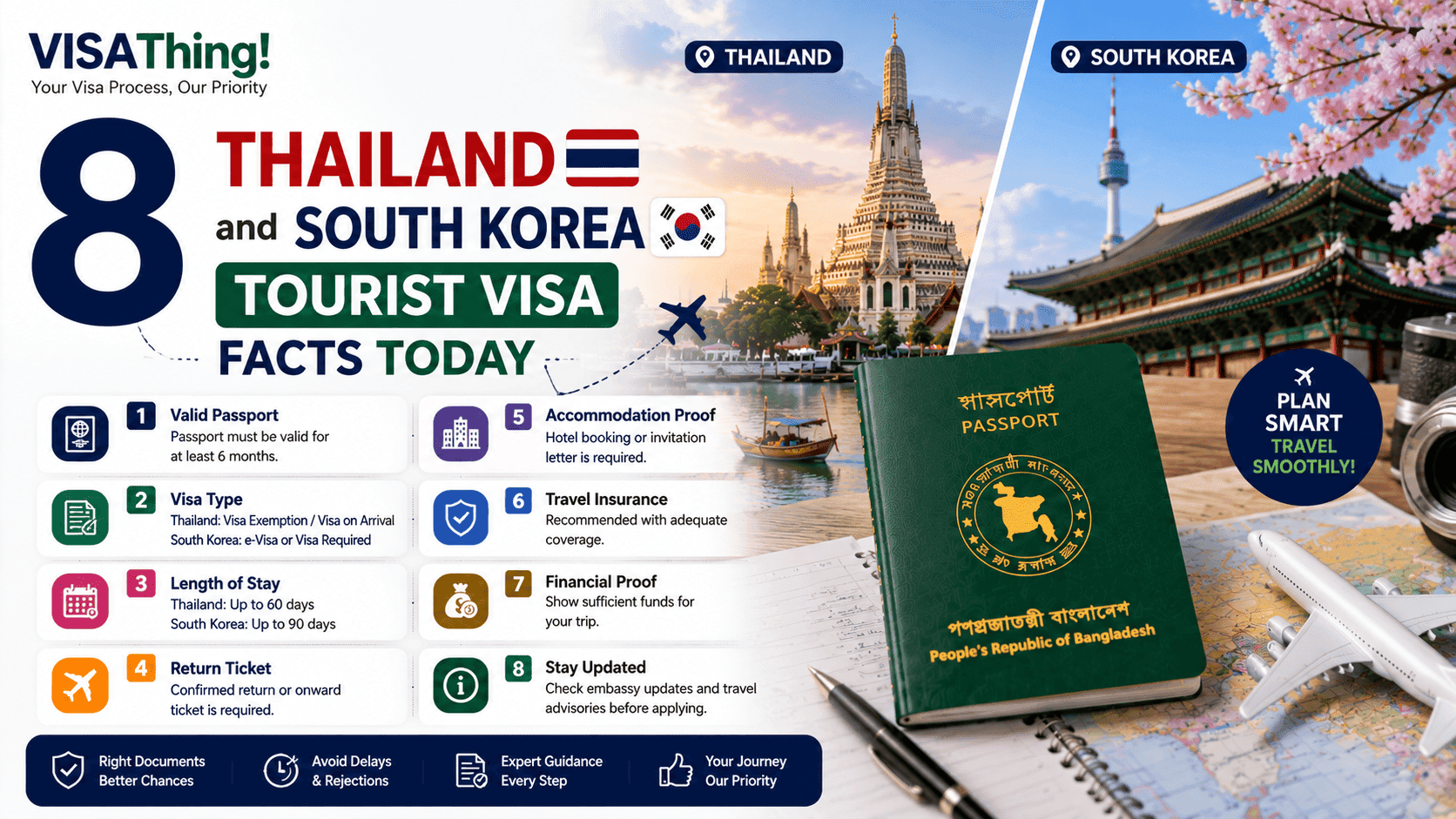
What are the 8 current Thailand and South Korea tourist visa facts?
The core facts are stable. Thailand focuses on route and stay limit, while South Korea focuses on nationality, document proof, and the short-term visit filing path.
Before acting on forum advice, keep these eight facts in view:
Thailand visa exemption can allow a stay of no more than 30 days for eligible nationals.
Thailand visa on arrival permits a stay of no more than 15 days.
A Thailand tourist visa generally allows a stay of up to 60 days and longer stays are handled through the Immigration Bureau.
Thai tourist visa applicants usually need a passport valid for at least 6 months, a completed form, a recent photo, and confirmed travel tickets.
Thailand also asks for proof of funds of 20,000 baht per person or 40,000 baht per family, and the listed tourist visa fee is 1,000 baht per entry.
Thailand’s official e-Visa system means applicants who are outside Thailand no longer must submit passports and supporting documents in person at a Thai mission.
South Korea short-term tourist cases commonly require a passport with more than 6 months’ validity, a round-trip e-ticket, proof of stay, financial evidence, and a travel plan with daily activities.
South Korea’s short-term visit (C-3) route can cover a single visa of 90 days or less, and K-ETA temporary exemption runs until 31 December 2026 for eligible visa-waiver and designated visa-free nationals.
How do you check the correct Thailand visa route before you book?
Start with the official route. Thailand MFA, the e-Visa portal, and the relevant Thai mission should point to the same category, stay limit, and filing place.
First, check your nationality against the route you plan to use. Do not assume a friend’s experience applies to you. Thailand’s entry categories are nationality-sensitive, and that is where many mistakes begin.
Second, match your itinerary to the allowed stay. A 12-day break, a 28-day holiday, and a 45-day visit may all need different handling. If your ticket dates exceed the route’s permitted stay, change the route before you change the story in your application.
Third, check where the application must be filed. Thailand’s e-Visa route is designed for applicants who are outside Thailand. If your travel plan or current location does not fit that condition, then the filing method changes as well.
A useful reality check is this: if the route, stay length, and documents do not agree with each other on paper, immigration staff will see that immediately. Bookings should come after that check, not before it.
How do you apply for a Thailand e-Visa from outside Thailand?
Apply online before travel. Thailand’s official e-Visa system accepts applications from people who are outside Thailand and sends an approval email for airline and immigration checks.
The process is fairly direct. Prepare the passport, photograph, travel tickets, and any financial or itinerary support you may need. Complete the online application carefully, upload the required documents, and wait for the decision through the official system.
One common mistake is assuming “e-Visa” means you can sort it out after arrival. The official rule says applicants must be outside Thailand when applying. Another useful point is that e-Visa applicants no longer need to submit passports and supporting papers in person at a Royal Thai Embassy or Consulate-General.
"VISAThing provides remote and online application support, with cross-border embassy handling via India when a case requires it."
When the e-Visa is approved, print the confirmation email and keep a digital copy as well. Airlines and Thai immigration officers may ask to see it, and relying on weak mobile connectivity at the airport is not a good plan.
What documents does a Thailand tourist visa usually require?
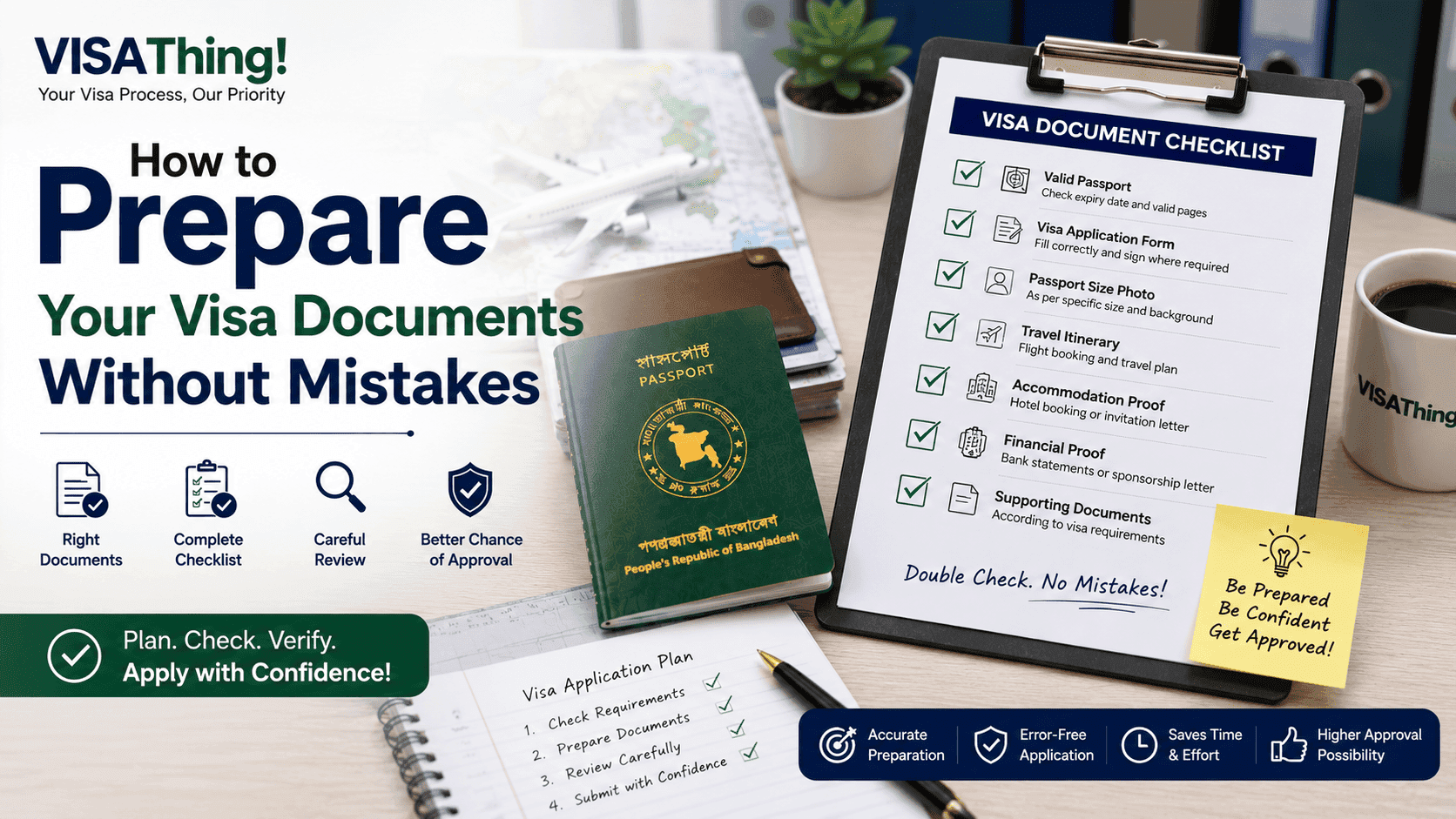
Thai tourist visa files are document-led. The Ministry of Foreign Affairs lists a passport with at least six months’ validity, an application form, a recent photo, confirmed tickets, and proof of funds.
That means the file must tell a consistent story. Your passport validity, intended stay, ticket dates, and financial proof should all support the same trip. If one item points to a different plan, the case becomes harder than it needs to be.
That same logic applies to reservations as well, and Troper Tours notes in its breakdown of travel agent, tour operator and OTA roles that split booking channels can make it harder to present one clean, verifiable itinerary when an embassy reviews transport and accommodation proof.
These are the main requirements most travelers look at first:
Passport: At least 6 months’ validity.
Application package: Completed application form and recent photograph.
Travel evidence: Confirmed travel tickets that fit the intended stay.
Funds: 20,000 baht per person or 40,000 baht per family.
Fee and visa terms: 1,000 baht per entry, with validity listed as 3 months or 6 months and a permitted stay of up to 60 days.
The phrase “valid for 3 months or 6 months” catches people out. It refers to the visa’s use window, not an automatic 3- or 6-month stay inside Thailand. The permitted stay is the number that controls the trip.
How does South Korea’s tourist visa process compare with Thailand’s?
South Korea is usually more itinerary-specific. Korea’s short-term visit (C-3) route leans on a daily travel plan and proof of stay, while Thailand often starts with entry category and funds.
Thailand’s public guidance is easy to compare by stay limit: 15 days, 30 days, or 60 days depending on route. South Korea’s process often feels different because the file itself carries more weight. The consular checklist commonly asks for proof of stay, financial capacity, and a travel plan with daily activities.
The filing path also differs. Thailand’s e-Visa system can complete much of the process online for eligible applicants outside Thailand. South Korea’s Visa Portal is semi-online in many tourist cases: complete the e-form first, then print the barcode form and submit it with supporting documents to the Korean embassy or consulate in the country of residence.
If your nationality falls under a Korean visa-waiver or designated visa-free scheme, K-ETA may become relevant. If it does not, the standard visa route still applies. That is why “online travel authorization” should never be treated as a universal shortcut.
How do you prepare a South Korea short-term visit (C-3) application?
Build a tight file. Korea Visa Portal and consular checklists expect a passport with more than six months’ validity, a round-trip e-ticket, proof of stay, financial evidence, and a travel plan with daily activities.
Start by completing the e-form on the Korea Visa Portal before visiting the embassy or consulate. The system is not the whole application by itself. You still need the printed barcode form and the full set of supporting documents.
Next, make the itinerary detailed enough to stand on its own. Hotel confirmations should match the travel dates, and the daily plan should show what you intend to do on each day or at least across each stage of the trip. A hotel booking alone is often not enough to make the travel purpose feel concrete.
"VISAThing serves travelers from Bangladesh through a Dhaka office and online portal for visa documentation support."
Then review the financial evidence with the same discipline. If the ticket, hotel, and daily plan show a 10-day holiday but the funds are weak or unexplained, the application may look incomplete. South Korea’s tourist route rewards coherence.
Do you still need K-ETA for South Korea in 2026?
It depends on nationality. Korean mission notices cite a Ministry of Justice extension of the K-ETA temporary exemption until 31 December 2026 for eligible visa-waiver and designated visa-free nationals.
That means some travelers who would normally use K-ETA may be exempt during that period. It does not mean everyone can skip both K-ETA and a visa. K-ETA exists for eligible visa-waiver and designated visa-free nationals, not for every passport holder.
A common misunderstanding is to see K-ETA as a cheaper or faster replacement for a visa. It is not a visa substitute for nationalities that already need a visa. If your nationality requires a tourist visa, the exemption does not change that basic rule.
Travelers who are eligible for the temporary exemption can still apply for K-ETA if they want its related benefits. The practical step is to confirm your nationality category first, then the travel authorization or visa route second.
What mistakes cause delays in Thailand and South Korea tourist visa cases?
Most delays come from category mistakes and document gaps. Thailand and South Korea both check passport validity, itinerary consistency, financial proof, and whether the chosen route fits nationality and stay length.
The pattern is very predictable. Travelers often focus on one document, usually the ticket, and forget the wider logic of the file. Consular staff and immigration officers do the opposite. They read the whole trip as one set of facts.
Typical delay points include:
Wrong stay category
Passport under 6 months
Ticket dates longer than permitted stay
Weak proof of stay
Missing financial evidence
Confusing K-ETA with a visa
If your Thailand booking runs 45 days but you planned around a 30-day visa exemption, that mismatch will surface quickly. If your South Korea file has hotel bookings but no daily activities, the travel purpose may look too thin. A disciplined pre-check is often the difference between a clean application and a second attempt.