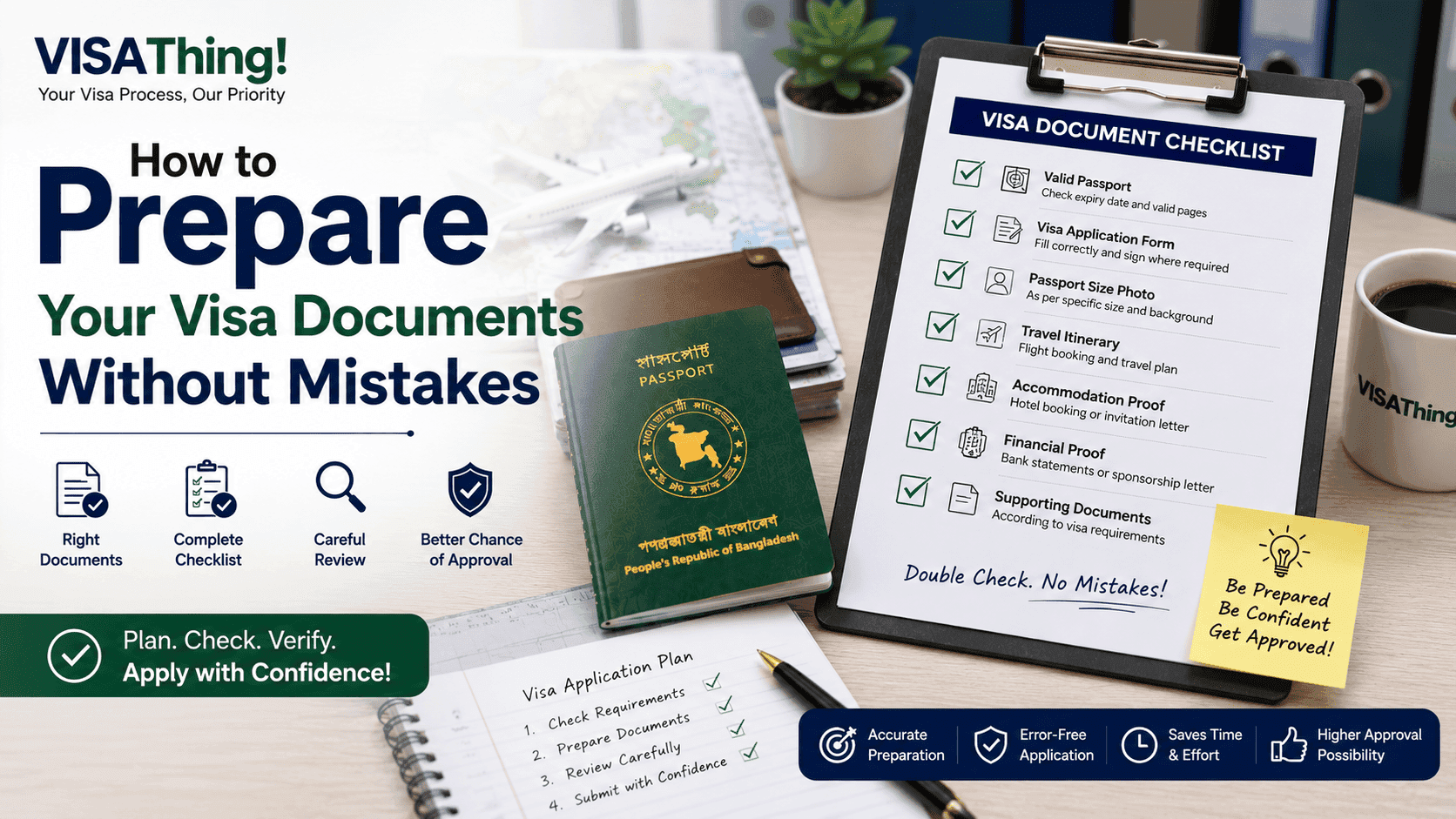
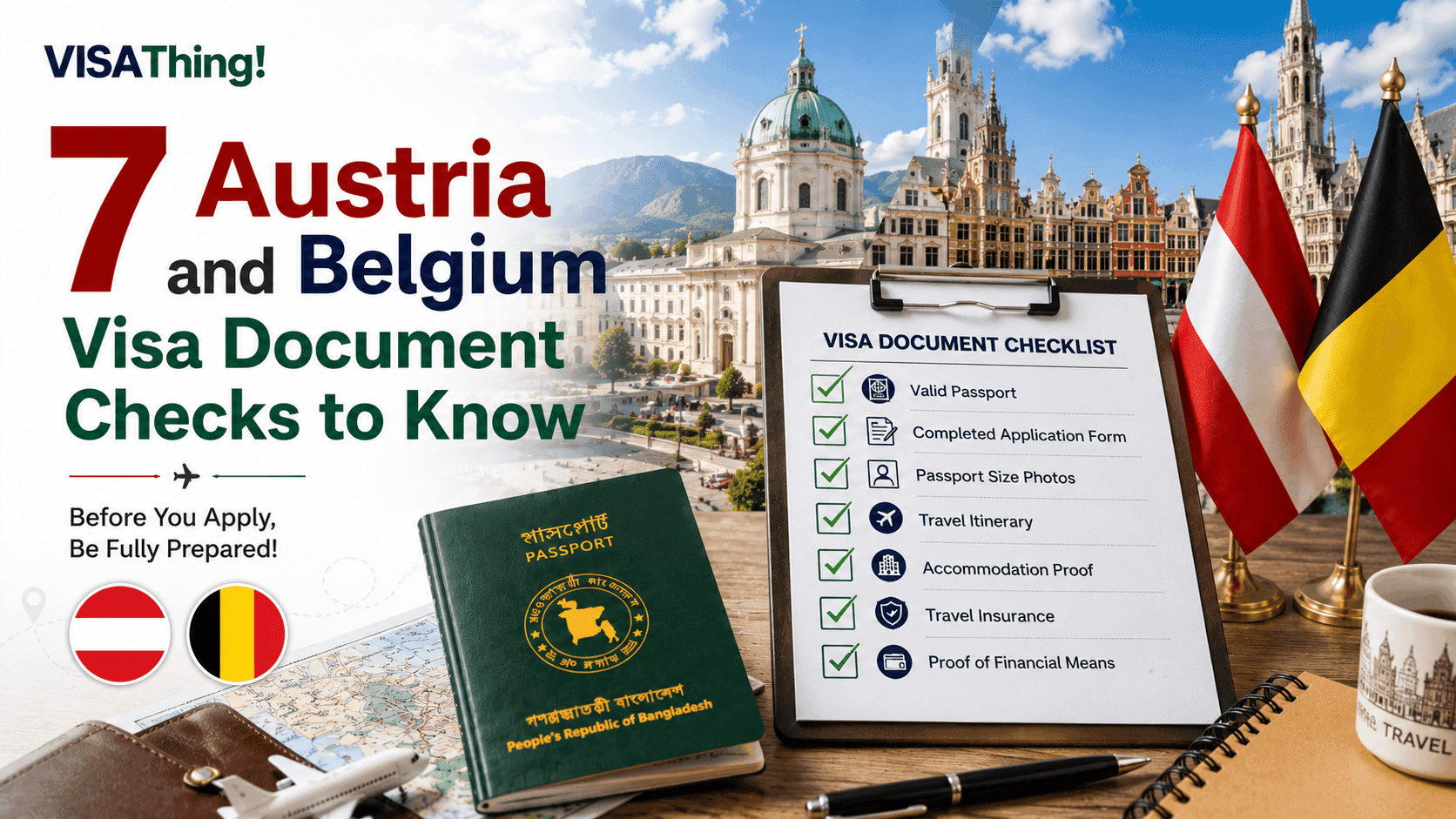
The good news is that visa documentation can be organized with a clear method. If you start with the official checklist for the exact visa type, match every detail to your passport, and review each file before submission, you can reduce risk sharply and submit with confidence.
Why visa documentation errors cause delays
Visa officers do not assess documents in isolation. They look at the whole file and ask whether it is complete, credible and consistent. A bank statement that does not match the declared income, a passport number typed incorrectly, or a cropped scan can create doubt even when the trip itself is genuine.
Official guidance across UK, US and Schengen systems points in the same direction: submit a complete file and make sure all details match the travel document. That sounds simple, yet many mistakes happen because applicants reuse old papers, rely on memory when filling out forms, or upload files in haste.
A few of the most common problems are easy to spot once you know what to check:
Mismatched spellings of names
Passport validity that is too short
Old bank statements
Incomplete scans
Photos that do not meet current rules
Missing supporting evidence
One careful review can prevent most of these issues.
Use the official visa document checklist for each visa type
The safest starting point is always the official visa document checklist for the exact category you are applying for. Not a social media post, not a friend’s old file, and not a checklist for a different embassy. Rules vary by country and sometimes by visa category within the same country.
For UK applications, official guidance states that applicants can check what documents they need before applying, and the document checklist appears on the application form. That matters because a visitor visa, student route, and work route may ask for different proof. Submitting extra papers is not always helpful if they do not support the case clearly.
For US applications, document preparation is tied closely to the visa class and interview process. The U.S. Department of State also makes it clear that each person who needs a visa must submit a separate application, even when travelling as a family. For Schengen applications, the form itself includes a supporting-documents section, and official guidance stresses that the applicant is personally responsible for a complete file.
A simple comparison helps:
Check passport validity and identity details before you apply
Your passport is the anchor document for the whole application. Every form entry, photo record and supporting paper should fit it perfectly.
Start with validity. Official UK guidance requires a valid passport or other travel document for the application and for travel. For US visitor visas, the passport generally must be valid for at least six months beyond the period of stay, unless a country-specific exemption applies. Schengen destinations also check passport validity closely, though exact timing rules depend on the applicable requirements for the visa and travel dates.
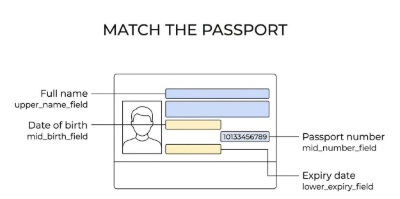
Then check identity data line by line. Your full name, date of birth, passport number, place of issue and expiry date should appear exactly as they do in the passport. This is especially important for Schengen forms, where the European Commission states that fields 1 to 3 must be completed according to the travel document.
One missing letter can turn a routine case into a query.

If you have used more than one version of your name in older records, decide early how you will address that. A spelling difference between a bank statement and a passport may need a clear explanation or updated evidence. The same applies to inconsistent addresses, employer names or marital status details across documents.
Follow visa photo rules and document upload formats
Photo mistakes are common because many applicants assume any recent passport-style photo will do. That is not always the case. The U.S. Department of State, for example, requires visa photos taken within the last six months so they reflect the applicant’s current appearance. The background must be plain white or off-white, and the image must show a full-face view facing the camera. A digital image copied or scanned from another official document is not acceptable.
Upload rules deserve equal care. UK guidance says uploaded evidence must show the full document and should be saved in accepted formats such as PDF, PNG, JPG or JPEG. If you photograph reflective documents, including laminated passport pages, the guidance advises turning the flash off and making sure the document is well lit and in focus.
These details may look technical, yet they affect legibility and credibility. A sharp, complete upload tells the caseworker that your file is organized. A blurred edge or cut-off page suggests the opposite.
Here is a practical comparison:
Passport Details
UK: Passport must be valid and clearly scanned.
US: Passport is generally expected to remain valid for the required period, often six months beyond the intended stay.
Schengen: Passport information must match the visa application form exactly.
Photo Requirements
UK: Follow the specific photo requirements for your visa route and submit a clear image.
US: Photo should be recent, full-face, and taken against a plain white or off-white background.
Schengen: Photo requirements may vary depending on the embassy or application centre.
File Format
UK: Common formats include PDF, PNG, JPG, and JPEG, depending on the application system.
US: Digital photos must meet the required format and image-quality standards.
Schengen: File-format requirements can vary by embassy portal or VAC.
Image & Scan Quality
UK: Documents should be complete, visible, and in focus.
US: Photos and uploaded documents should meet the required digital quality standards.
Schengen: Documents should be clear, complete, readable, and properly scanned.
A sensible habit is to review every uploaded file at 100 per cent zoom before submission. If text is hard to read on your screen, it will not improve once uploaded.
Build supporting evidence that matches your visa purpose
Supporting evidence should tell one clear story: why you are travelling, how the trip will be funded, and why the information on the form can be trusted. Many refusals do not come from one missing paper alone. They come from a weak link between the papers that were submitted.
If you are visiting family, an invitation should match the travel dates, location and relationship stated in the application. If you are travelling for tourism, hotel plans and itinerary should fit the duration of stay and budget. If someone else is sponsoring the trip, their financial documents and identity papers should explain that sponsorship clearly.
Financial evidence needs special care. Official UK guidance warns against using bank statements or letters issued more than one year before the application date. In practice, recent and relevant documents are much stronger. If your salary is shown on payslips, it should also make sense against the bank statement credits. If you declare self-employment income, tax or business records should support that picture.
A useful way to test your file is to ask whether each key point has supporting proof:
Consistency matters as much as completeness. A short holiday supported by modest but steady finances can look stronger than an expensive trip plan with unclear funding.
Review visa application forms line by line
Many applicants spend days collecting documents and only minutes checking the form. That balance should be reversed. A well-prepared file can still run into trouble if the form contains avoidable errors.
Read every answer against the passport and supporting papers. Dates should match exactly. Previous travel history should be accurate. Employment details should be current. If a question asks for one specific format, follow it. Do not guess a date if you can verify it from records.
This is especially relevant for applications with multiple travelers. The US system states that each person must submit a separate application. That means each family member’s form must stand on its own, with correct personal details, photo and supporting records where required.
Before pressing submit, pause and check these points:
A slow ten-minute review at the end can save weeks later.
Create a visa documentation routine in Bangladesh
Applicants in Bangladesh often manage extra practical steps, from arranging translations and legalization to dealing with visa centres, courier returns, or embassy processes handled through another country. A documented routine helps keep that complexity under control.
Digital organisation is a strong starting point. Keep one folder for the current visa, one subfolder for identity documents, one for finances, one for travel plans, and one for forms and confirmations. Name files clearly so you can find them instantly. “Passport-bio-page.pdf” is better than “scan003.jpg”.
This is a simple routine that works well for many travelers:
Download the official checklist for the exact visa type.
Scan the passport bio page and any relevant old visas clearly.
Collect current supporting evidence that matches the trip purpose.
Check photo rules and file format rules before taking photos or scans.
Review every form entry against the passport and documents.
Ask for a second review before submission if the case is time-sensitive or complex.
For applicants dealing with cross-border embassy handling, this method becomes even more valuable. If papers need to move between Bangladesh and India, or if online submission is followed by an in-person step, order and clarity can prevent costly repetition.
Know when visa document support can save time
Some applications are straightforward. Others involve sponsorship, business ownership, prior refusals, urgent travel, missing local embassy access, or document legalization. In those cases, professional review can be useful not because it replaces your responsibility, but because it adds structure and another layer of checking.
Technology-based visa support can help applicants in Bangladesh organise digital files, verify checklist coverage, prepare e-visa records, and manage cross-border processing where embassy logistics are more complex. The key benefit is not mystery or special access. It is careful preparation, accurate filing and fewer avoidable mistakes.
A visa application is still your file, your identity and your evidence. When the documents are complete, recent, readable and consistent, the process becomes much clearer, and you give your application the strongest possible start.